Implant Supported Dentures in Billings, MT
Implant Dentures from Dr. Joseph Thomas
Missing teeth can be difficult to come to terms with, and it’s even harder if you’re missing an entire arch of teeth. With implant-supported dentures, you can enjoy security in your new smile. Traditional dentures slip and slide while you’re trying to talk, but implant dentures are a permanent and sturdy solution to missing teeth.
Dr. Joseph Thomas, our implant dentist in Billings, MT, will examine your oral health needs and determine the tooth loss solution best suited for your lifestyle. Discover if implant-retained dentures are right for you by exploring our guide below.
Meet Your Implant Dentist, Dr. Thomas
Dr. Joseph Thomas grew up in Butte, MT, attended Butte Central High School, Gonzaga University, and the University of Washington, and began private dental practice in 1982. In addition to the certifications listed above, he is a member of the Ninth District Dental Society, the Montana Dental Association, and the American Dental Association.
His certifications are earned through thousands of hours of advanced classes, tests, and hands-on practical exams. He is one of fewer than 20 percent of dentists recognized by the AGD and AACD as the expert in both the science and art of dentistry. Dr. Thomas isn’t just experienced — he’s at the top of his field in continuing education and advanced training.

Implant-Supported Dentures vs. All-on-4: What’s the Difference?
All-on-4 is one type of implant-supported denture, so the two options overlap. The main difference is how the denture attaches. A snap-in (removable) implant denture clicks onto implants and comes out for cleaning. All-on-4 is a fixed full arch of teeth held by four strategically placed implants, and only your dentist can remove it.
Snap-in implant dentures may be a good fit if you:
-Want a more budget-friendly step up from traditional dentures
-Prefer to remove your teeth for cleaning and at night
-Want a simpler cleaning routine, or have limited dexterity
-Have an existing denture that can often be adapted
All-on-4 may be a good fit if you:
-Want teeth that feel and function as close to natural as possible
-Dislike the idea of removing and handling a denture
-Want to avoid a denture covering the roof of your mouth
-Are comfortable with a higher upfront investment for a fixed solution
Neither option is right for everyone. Bone density, gum health, medical history, and your goals all affect the best choice. At your consultation, Dr. Thomas will evaluate your needs and walk you through the pros and cons for your situation. Call (406) 298-4485 or schedule a consultation online to get started.
Am I a Good Candidate for Implant-Supported Dentures?
Many people who are missing most or all of their teeth are good candidates for implant-supported dentures, including people who have worn traditional dentures for years and are tired of slipping and sore spots. The best way to know for sure is a consultation and exam with Dr. Thomas, but these are the main factors.
You may be a good candidate if you:
-Are missing most or all of the teeth in one or both arches, or have teeth that can’t be saved
-Have enough jawbone to support implants, or are willing to have bone grafting if needed
-Have reasonably healthy gums, or are willing to treat gum disease before implant placement
-Are in good general health and able to undergo a minor oral surgical procedure
-Are committed to daily oral hygiene and regular dental checkups
-Are frustrated with traditional dentures and want better stability, chewing, and comfort
Factors that may require extra planning:
-Bone loss. Jawbone shrinks after teeth are lost, and the longer you’ve been without them, the more it may have changed. A bone graft or a different implant approach may help. A 3D scan or X-rays will show what you have to work with.
-Gum disease. Active gum disease needs to be treated first, because infection around implants can lead to implant failure. Once your gums are healthy, many patients can move forward.
-Smoking and tobacco use. Smoking slows healing and raises the risk of implant complications. Dr. Thomas may ask you to quit, or at least stop for a period before and after surgery.
-Diabetes and other health conditions. Well-controlled diabetes doesn’t necessarily rule out implants, but uncontrolled diabetes can affect healing. Conditions such as osteoporosis, autoimmune disorders, or a history of radiation to the head and neck, and some medications (including certain bone-strengthening drugs), may also affect planning. Be sure to share your full medical history and medication list.
-Grinding or clenching. Heavy grinding puts extra force on implants and restorations. A night guard or design adjustments may be recommended.
Who may not be a candidate right now?
Implant treatment may need to be delayed or may not be the best option if you have:
-Uncontrolled chronic health conditions
-Active infection or untreated gum disease
-Severe bone loss that can’t be corrected
-Ongoing treatment, such as certain cancer therapies, that affects healing
If implants aren’t right for you today, that doesn’t have to be the end of the road. Treating the underlying issue can open the door later, and well-fitted traditional dentures remain a good option for many patients.
Implant Supported Dentures Procedure
The Implant-Supported Dentures Process
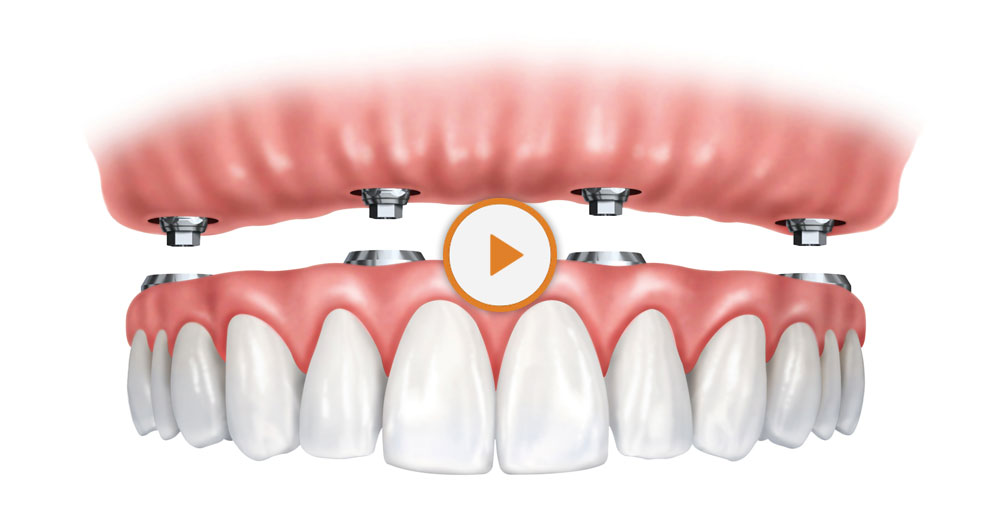
You’ll begin your journey to a complete smile with an initial consultation at Thomas Smile Designs. One of our Billings, MT dentists will examine your oral health and discuss your smile goals to ensure you get the perfect treatment. Once it’s decided that implant-supported dentures are the best restoration, we’ll schedule your next appointment.
The next step is implant placement. We’ll first administer a local anesthetic to ensure you don’t feel any pain during the procedure. We also offer dental sedation options if necessary. Your dentist will then strategically place your dental implants into your jawbone and place a temporary restoration to protect them during your recovery.
The healing process will take anywhere from three to six months, during which your implants will naturally fuse with your bone. This process is known as osseointegration and allows your implants to become a strong anchor for your dentures.
When your mouth has fully healed, you’ll return to our Billings office for your final restoration fitting. Dr.Thomas will make any adjustments if needed before securing your restoration in place. Once your dentures are secure, you’ll leave our office with a stunning and healthy smile.
Frequently Asked Questions
Renew Your Smile With our Billings Implant Dentist
Are you ready to give your smile new life? If you are a new patient, contact our office at (406) 298-4485 today to schedule your consultation or fill out our convenient online contact form. We gladly serve patients in Billings, Laurel, Columbus, and the surrounding areas with professional, up-to-date dental care

Address
1501 14th St W Ste 215,
Billings, MT 59102
New Patient (406) 298-4485
Current Patient (406) 256-5165
© 2022 Managed by Now Media Group